Namibia Safaris & Wildlife Experiences

    Etosha game drives, desert-elephant tracking, photography safaris and Caprivi water-based wildlife.

    Most Namibia safaris are self-drive — you set the pace and the lodges set the scene. Where guiding adds real value (Damaraland tracking, photography, Caprivi rivers), we add a specialist guide. Tell us what wildlife you want to see and we'll build the route.

    Etosha Wildlife

    Self-drive game viewing with floodlit waterholes — the best value Big Five experience in southern Africa.

    Desert-Elephant Tracking

    Guided tracking in Damaraland's ephemeral riverbeds — half-day or full-day options from local lodges.

    Photography Safaris

    Specialist-guided tours focused on light, hides and rare subjects — Sossusvlei, Etosha and the coast.

    Caprivi Water Safaris

    Boat-based wildlife on the Kwando, Zambezi and Chobe rivers — hippo, elephant and incredible birdlife.

    Cultural Experiences

    Himba and San community visits in Kaokoland and the Kalahari, arranged through community conservancies.

    Family Safaris

    Shorter drives, family rooms, plenty of pool time and child-friendly activities.

    So funktioniert es

    Von der ersten Anfrage bis zur Pannenhilfe unterwegs — ein Team in Windhoek betreut Ihre ganze Reise.

    1. 1

      Tell us what you want to see

      Big Five, desert elephants, predators, birds, photography — we tune the route to your wildlife wishlist.

    2. 2

      Self-drive or guided?

      Most Namibia safaris are self-drive. We add specialist guiding only where it earns its place (tracking, photography, Caprivi boats).

    3. 3

      Combined quote

      Park fees, game drives, lodges and 4x4 on one invoice — with conservation fees going where they should.

    Warum Reisende bei uns buchen

    Lokal geführt in Windhoek. Ein Buchungsteam, eine Rechnung, Anbieterbeziehungen, auf die Sie sich verlassen können.

    Honest about guiding

    Etosha rewards self-drive. Damaraland tracking needs a guide. We tell you straight where to spend on guiding.

    Community conservancy access

    Bookings into community-run conservancies channel income to local communities — and unlock the best tracking.

    Photographer-friendly

    Slower routes, golden-hour timing, hides and specialist guides for serious photographers.

    Family-tested operators

    Family game drives and water activities matched to ages — no marathon vehicle days for small kids.

    Where to see Namibia's wildlife

    Etosha is the heavyweight — lion, elephant, black rhino, giraffe, oryx, springbok, and ~340 bird species — best in the dry months when wildlife concentrates at waterholes. Damaraland delivers desert-adapted elephant, black rhino and lion in landscapes you won't see anywhere else. Caprivi (Zambezi) is the green, water-rich corner — boat safaris for hippo, elephant, crocodile and birds. The Skeleton Coast is for jackals, brown hyena and Cape fur seals, plus the surreal shipwreck coastline.
    Best time for a Namibia safari

    Game viewing peaks May–October (dry season): sparse vegetation, animals at waterholes, comfortable temperatures. November–April is green season — fewer animals visible but dramatic skies, baby animals and excellent birdwatching. Photography is best at the shoulder months (April–May and September–October) when light is soft and crowds are lighter.

    Wildlife you meet on a Namibia safari

    Etosha, the Kavango and the Zambezi.

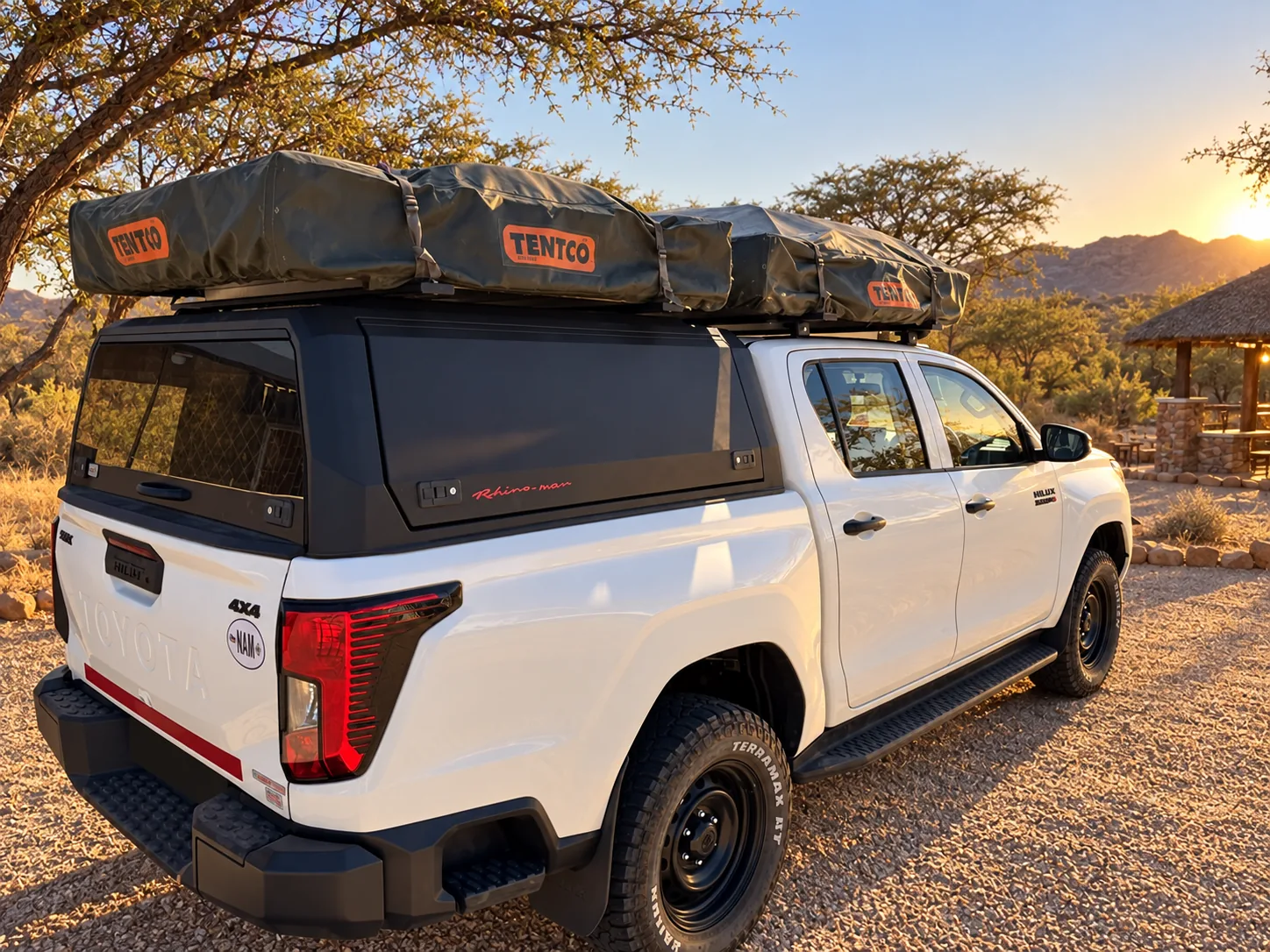
    White Toyota Hilux double cab with canopy and two folded rooftop tents, rear three-quarter view, at a lodge
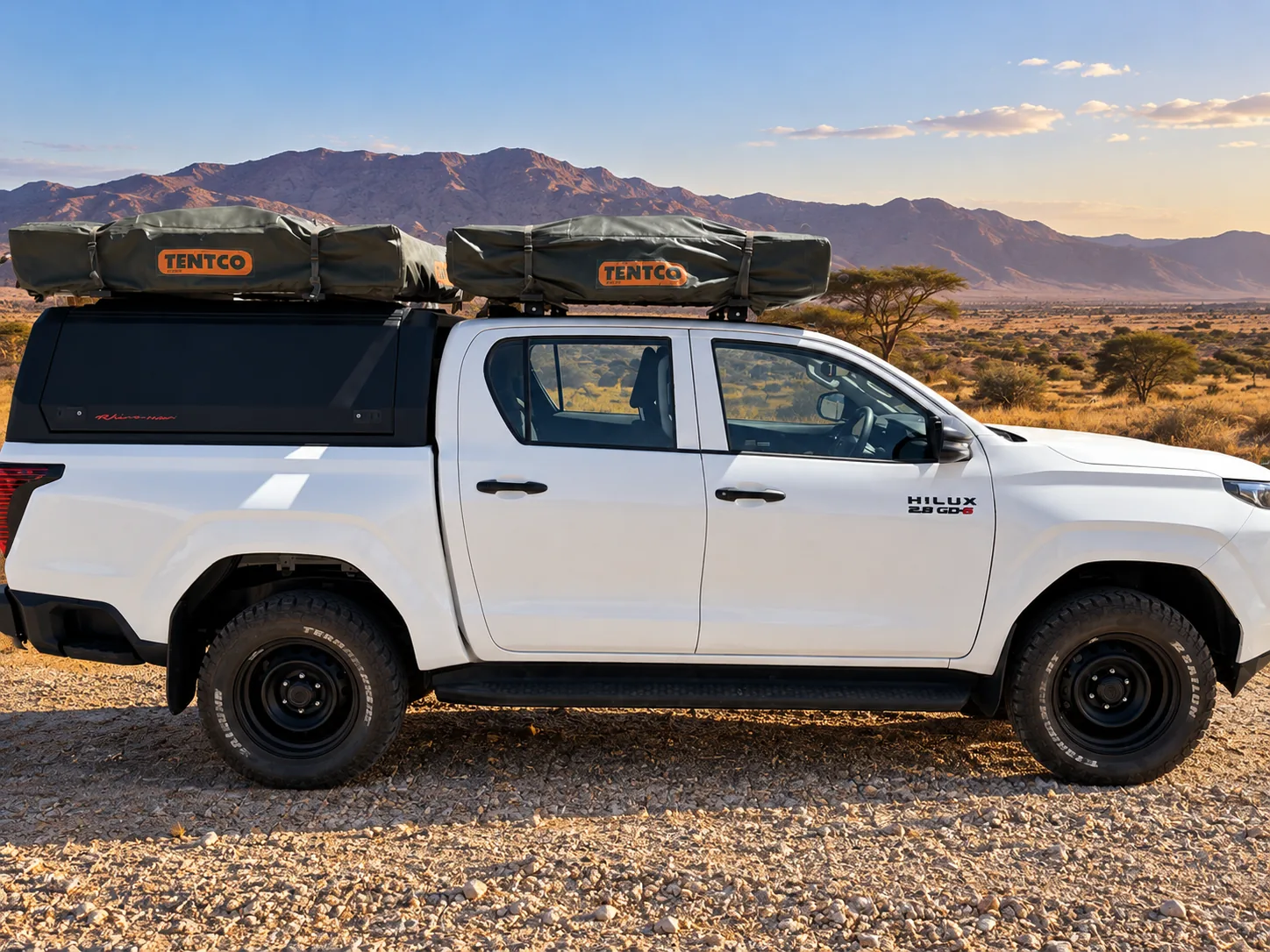
    White Toyota Hilux double cab with two folded rooftop tents, side view, in savanna
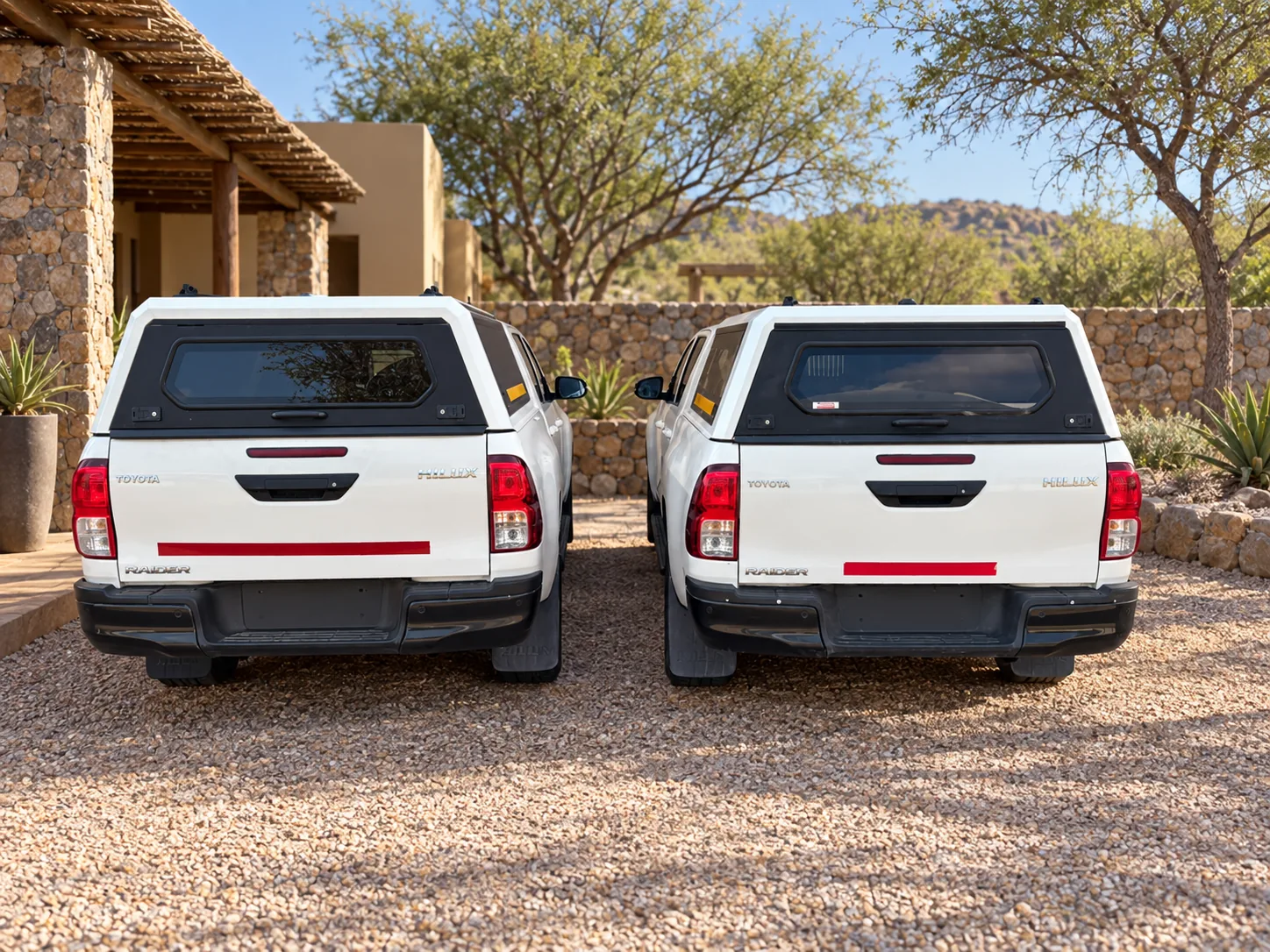
    Two white Toyota Hilux double cabs with canopies, rear view, parked at a stone lodge

    Häufige Fragen

    Kurze Antworten — schreiben Sie uns auf WhatsApp, wenn etwas hier nicht beantwortet wird.

    Lion, elephant, leopard and rhino — yes, all in Etosha plus parts of Damaraland and the private reserves. Buffalo are only in the Caprivi (Zambezi). So Big Five is possible on a longer trip combining Etosha + Caprivi.

    Yes — Etosha is designed for self-drive, with tarred and well-graded gravel game-viewing loops. You stay in your vehicle, observe distance rules, and the experience is exceptional. Our briefing covers all the practicalities.

    Strongly recommended. The ephemeral riverbeds are vast and the elephants move with the rain. Local guides know the herds and the access tracks — without one, you may drive past.

    Etosha for variety and easy access, Damaraland for unique subjects (desert elephant, rhino), Caprivi for birds and water-based subjects. We add specialist photography guiding where you want it.

    May–October is peak — sparse vegetation, animals concentrated at waterholes, comfortable temperatures. Photographers favour April–May and September–October when light is soft and crowds are lighter.

    Two to three nights is the sweet spot — enough for one full day in the west (Okaukuejo waterhole), one in the centre/east (Halali, Namutoni) and a relaxed third morning. Single-night stops waste a full day on transit.

    Both. One night inside (Okaukuejo for floodlit waterhole, Halali central, Namutoni east) for park access. One or two nights on a private reserve (Onguma, Mushara, Etosha Heights) for off-road drives, night drives and walks not allowed inside the park.

    Not inside Etosha (the park closes at sunset). Yes on private reserves like Onguma, Erindi, Okonjima and Mushara — night drives there often produce leopard, brown hyena, aardwolf and porcupine sightings.

    Cheetah: best at Okonjima (AfriCat), Erindi and parts of Etosha. Rhino: excellent in Etosha (especially Okaukuejo waterhole at night) and on conservation-led trips into Damaraland to track desert black rhino.

    Yes on private reserves and conservancies — Onguma, Damaraland (desert-elephant tracking), the Erongo and Brandberg. Walking inside Etosha is not permitted.

    Most of Namibia is malaria-free. The Caprivi (Zambezi), Kavango and northern Etosha carry low risk Nov–April — consult a travel clinic. Elsewhere (Sossusvlei, central Damaraland) is no-risk.

    Layers — early-morning drives are cold, daytime is warm. Neutral colours (khaki, beige, olive), closed shoes, broad-brimmed hat, polarised sunglasses, sunscreen, binoculars and a camera with a 200mm+ lens. We send a full packing list.

    Yes — Etosha self-drive is ideal for families (safe in-vehicle viewing). Some private camps have minimum-age policies (often 7 or 12). We filter for family-friendly properties with pools and dedicated kids' programmes.

    Onguma and Mushara have professional photographic hides at waterholes. Okaukuejo's floodlit waterhole is a free public hide. For serious photo trips we book specialist photographic guides for Etosha and Damaraland.

    Community conservancies in Damaraland and Kaokoland use lodge and activity fees for anti-poaching, schools, water and wildlife monitoring. Booking conservancy-based lodges directly supports the conservation model that has brought desert lion and rhino back from collapse.

    Yes — common combination. Self-drive Namibia (Etosha + Caprivi), cross into Botswana at Ngoma for Chobe, then fly to Maun for the Okavango Delta. We arrange the cross-border 4x4 paperwork and the onward Botswana camps.

    Plan your Namibia safari

    Send us your dates and what you want to see — Big Five, photography, family or remote wilderness — and we'll send a route and quote.

    This is an AI-assisted planning tool. It does not confirm bookings, vehicle availability, campsite availability or final prices. Final route, vehicle, accommodation availability and pricing are confirmed by Namibia Destinations staff.