Visa & entry requirements for Namibia (2026)
Citizens of the EU, UK, USA, Canada, Australia, New Zealand, South Africa, Botswana and most Commonwealth countries enter Namibia visa-free for up to 90 days. Your passport must have at least 6 months validity beyond your departure date and 3 blank pages. A return or onward ticket is occasionally requested at Hosea Kutako (Windhoek) airport. Yellow fever vaccination certificates are required only if you are flying in from (or transiting more than 12 hours through) a yellow-fever risk country — most European, North American and Australasian travellers do not need one. Children under 18 require a full unabridged birth certificate showing both parents and, if travelling with one parent only, a signed parental consent letter. Namibia stamps in / stamps out — no online forms required.
The two Namibia seasons that matter
Forget 'low season' — Namibia has two genuine seasons. High Season runs May to October: dry, cool to cold mornings (5–12°C), warm dry days (22–28°C), no rain, no mosquitoes, and the country's wildlife concentrates around the remaining waterholes — Etosha at its absolute best. This is also when international demand peaks and rates are highest. Book 6–9 months ahead for July, August and September. Green Season runs November to April: short, dramatic afternoon thunderstorms, lush landscapes, newborn animals, full rivers in Caprivi, and rates 25–40% lower. Photography in Green Season is unmatched — towering clouds, golden light, empty roads. The only trade-off is wildlife disperses (less concentrated at Etosha's waterholes) and a handful of dirt roads in the far north can briefly close. For first-timers torn between the two: June and November are the sweet-spot shoulder weeks.
Which 4x4 should you rent in Namibia?
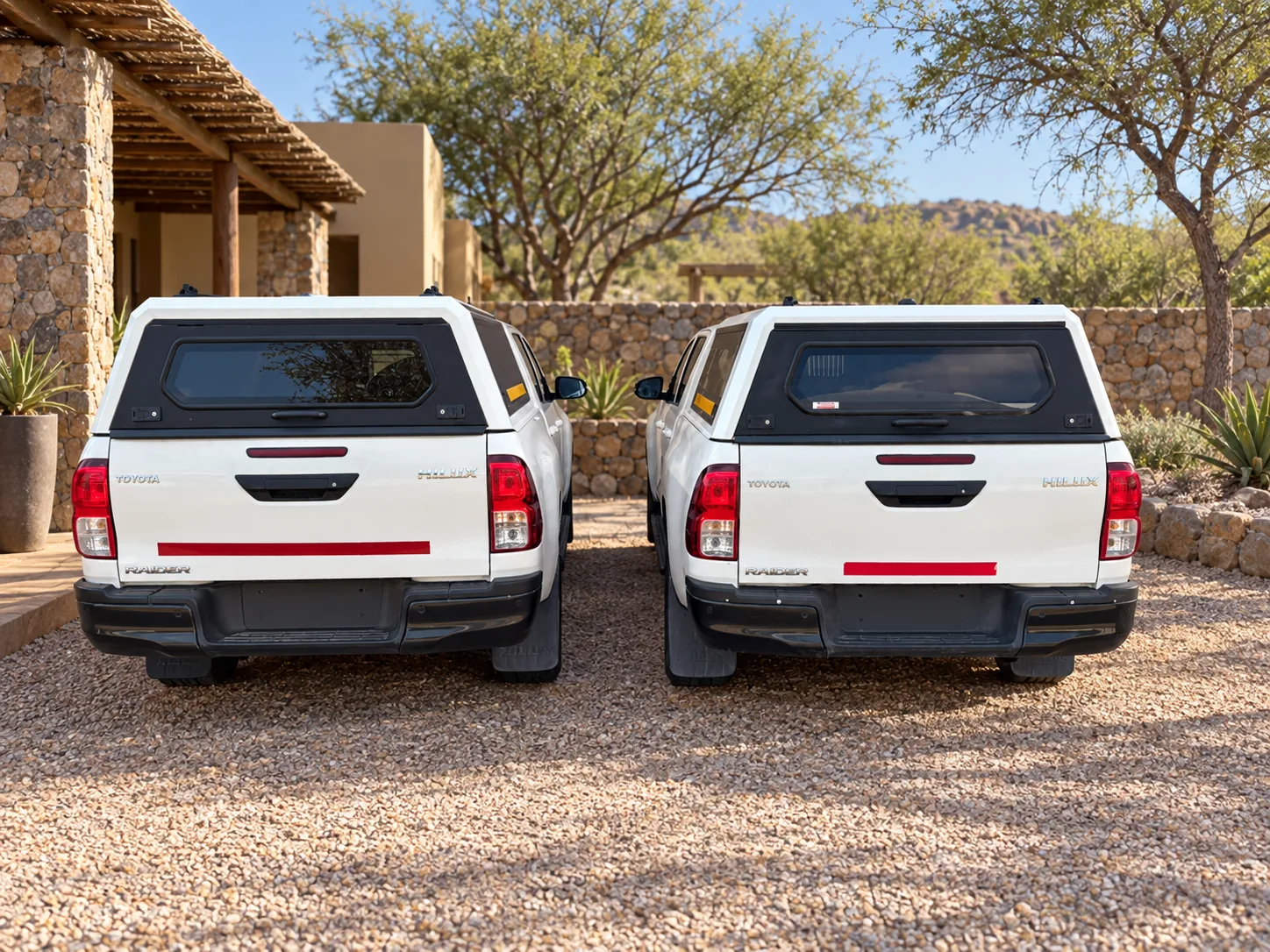
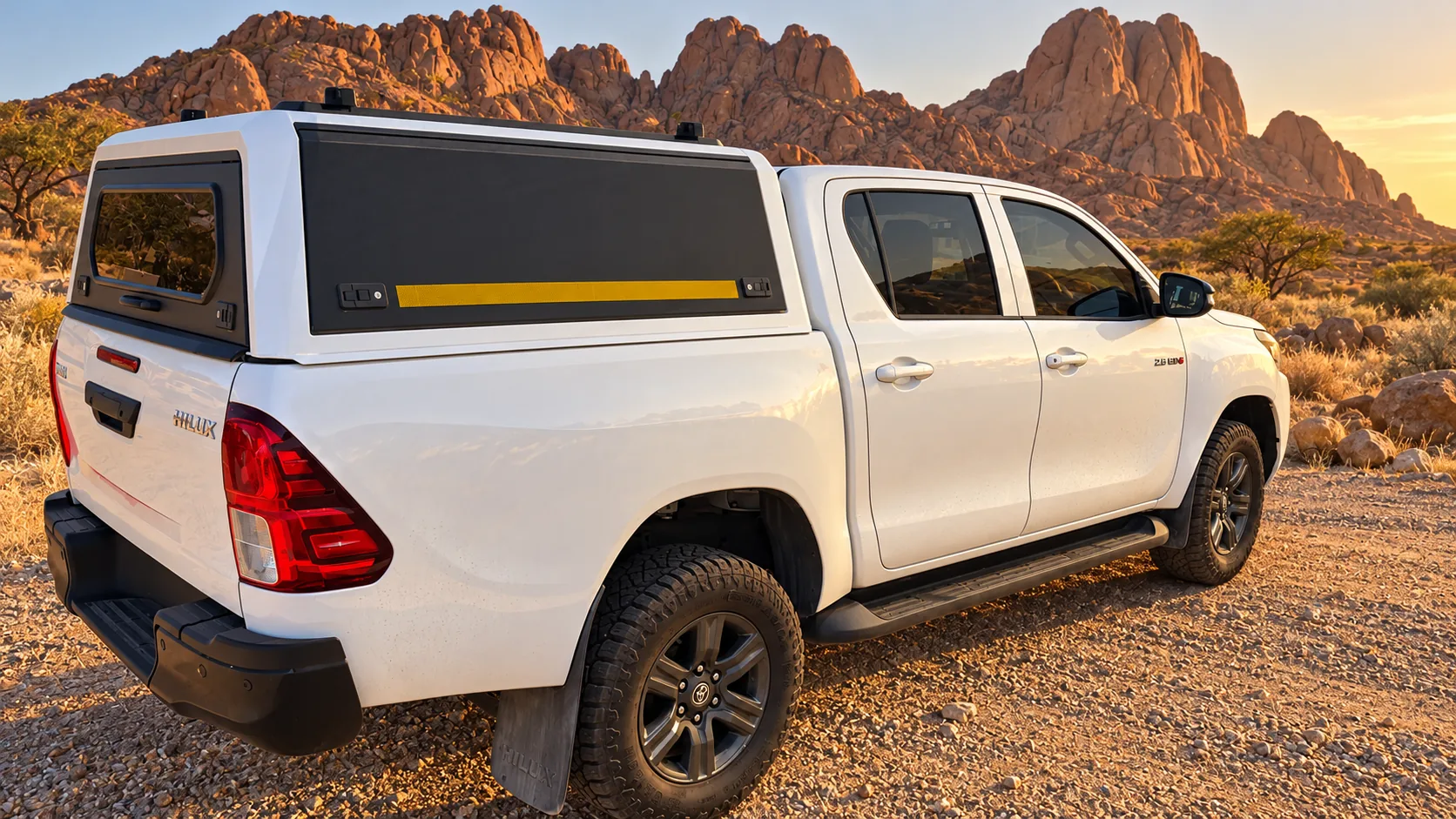
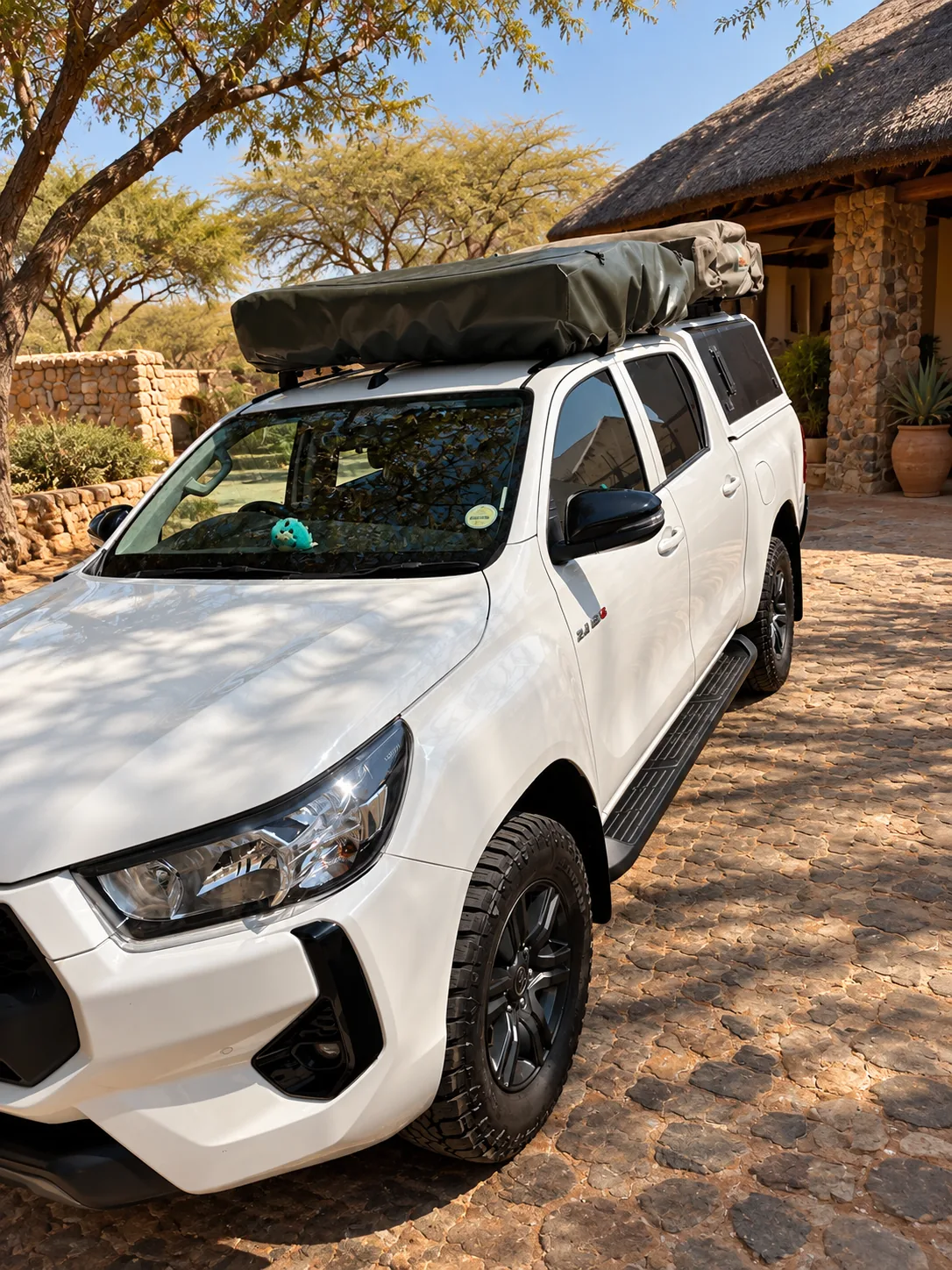
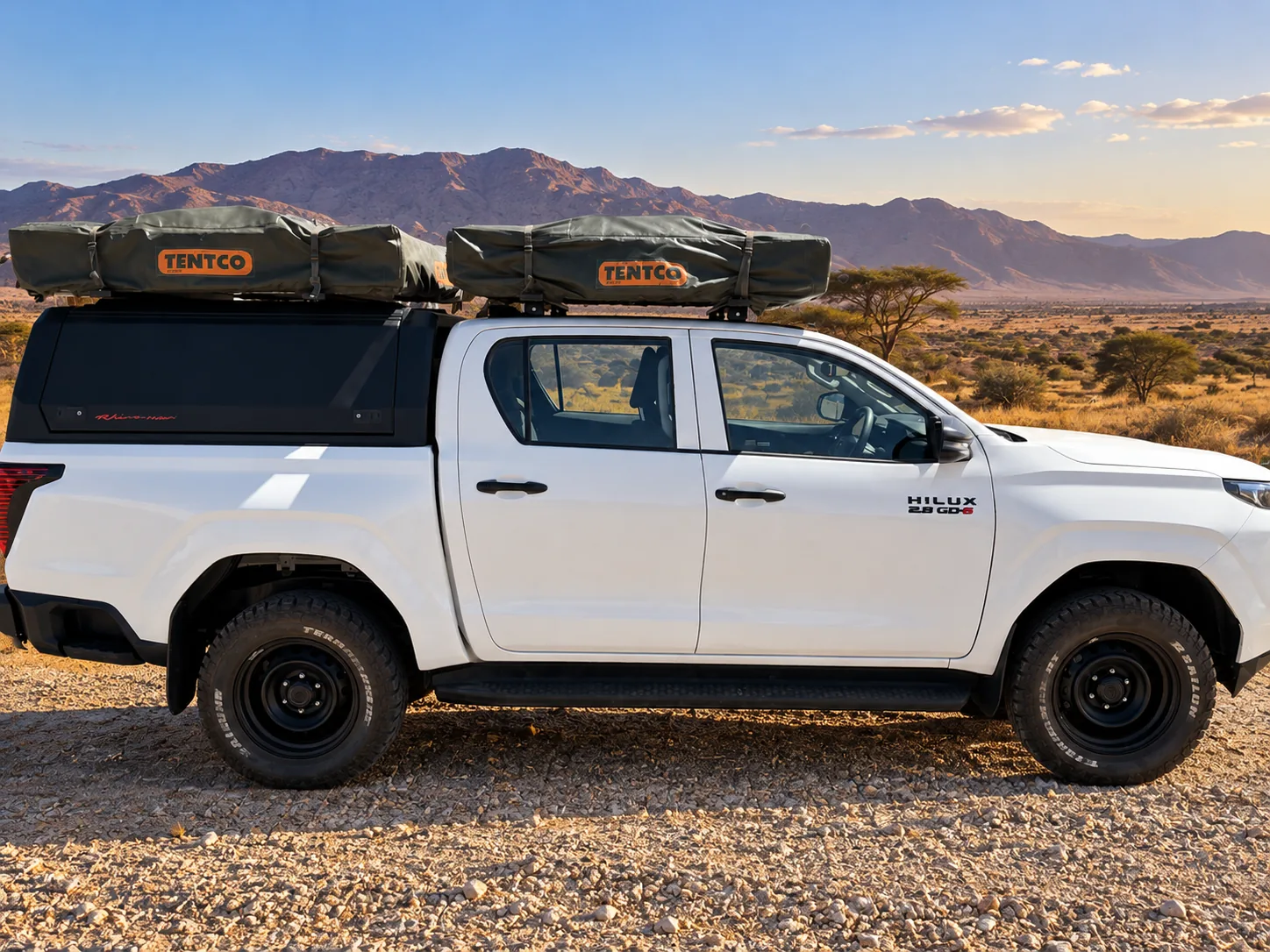
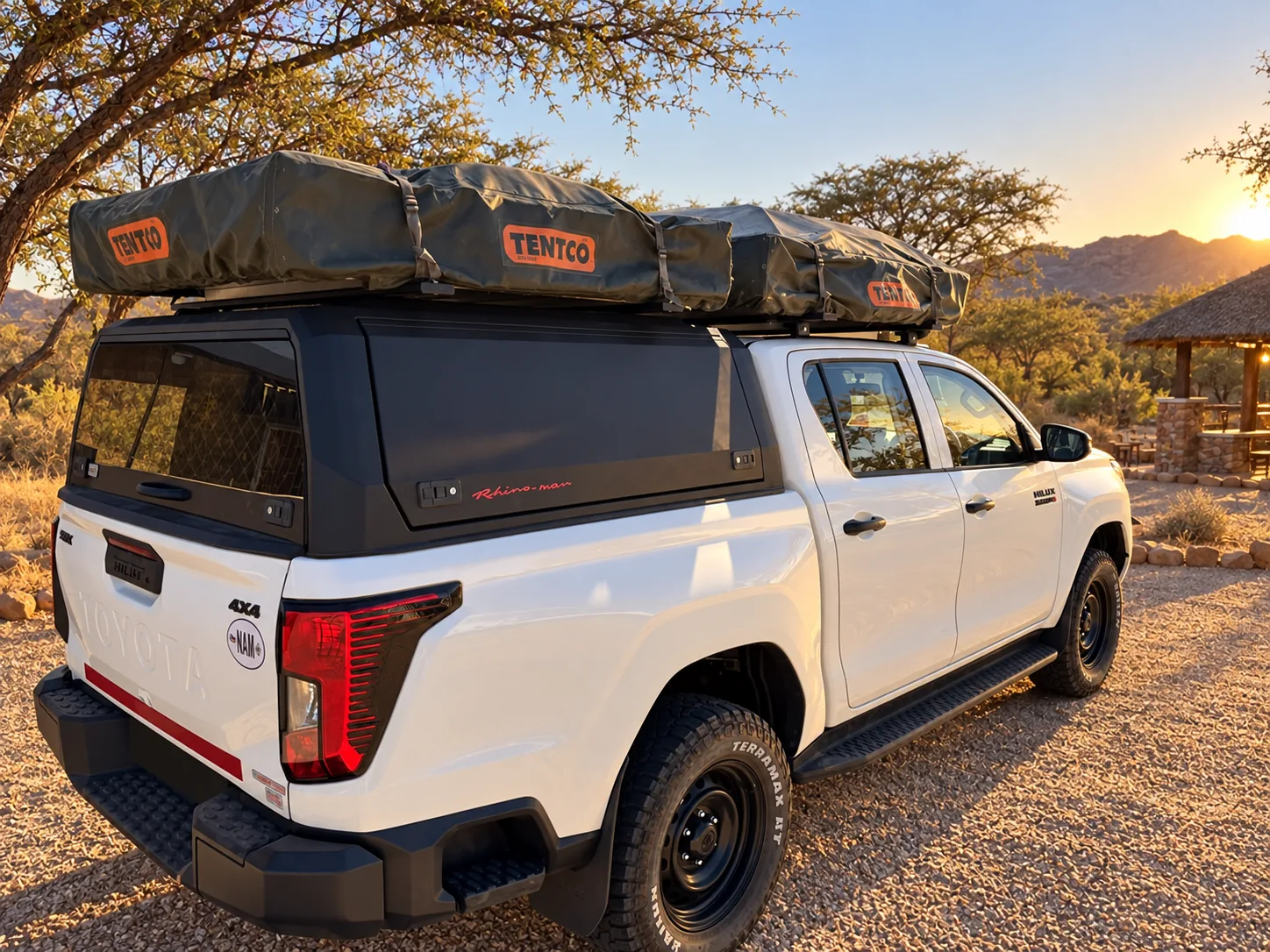
Almost every Namibia self-drive can be done in a Toyota Hilux Double Cab — the country's workhorse. The choice is between the 2.4 and 2.8 engines. The Hilux 2.4 Double Cab is perfect for two travellers on the classic loop (Windhoek → Sossusvlei → Swakopmund → Damaraland → Etosha): tar roads, well-maintained gravel C-roads, light deep-sand sections. Fuel efficient, comfortable, capable. The Hilux 2.8 Double Cab is the right choice for families of 4, anyone running a camping-equipped setup (roof tent, fridge, dual battery), or routes that include genuine 4x4-only tracks: the Sossusvlei dune drive, the D3707 to Kaokoland, Van Zyl's Pass, or remote Caprivi tracks. Both come with two spare tyres, a high-lift jack, recovery kit and a satellite phone standard on our fleet. Skip the Fortuner / Land Cruiser upsell unless you genuinely have 5–7 passengers — the Hilux Double Cab is faster, lighter and easier to recover if you do get stuck.
Camping in Namibia — what you need to know
Camping in Namibia is exceptional — clean, safe, well-equipped sites in some of the most photogenic places on earth. There are three networks you'll mix between. NWR (Namibia Wildlife Resorts) runs the inside-park sites: Sesriem (the only way to be inside the Sossusvlei gate at sunrise), Okaukuejo, Halali and Namutoni in Etosha, plus Waterberg and others. Book direct or through us — these sell out 6+ months ahead. Gondwana Collection sites surround the parks with reliable, mid-range stands with private ablutions. Private sites (Solitaire, Spitzkoppe community campsite, Hoada, Ngepi in Caprivi) are some of the most memorable. Bring or rent: a roof tent or ground tent setup, a 12V fridge (our camping 4x4s carry a 40L unit), gas cooker, headlamps, sleeping bags rated to 0°C in winter. Most travellers rent a fully camping-equipped Hilux — cheaper than flying with gear and the kit is already road-tested. Water at NWR sites is potable; at remote sites carry 5L per person per day.
Packing list for a Namibia self-drive
Clothing: 3–4 days of layers (it can be 5°C at sunrise and 28°C by midday in the same day), 1 warm fleece, 1 windproof jacket, closed walking shoes, sandals, a wide-brim hat, a buff/scarf for dust. Tech: power bank (game-drive vehicles rarely have USB), plug adapter (Namibia uses Type D, M and N — UK 3-pin and South African 3-pin both work), camera with extra batteries (cold mornings drain batteries fast), a head torch (every camp at night). Health: SPF 50, after-sun, lip balm, a small first-aid kit, insect repellent (only really needed in Caprivi), any prescription meds for the full trip (rural pharmacies are limited). Documents: passport, driving licence, printed rental voucher and lodge confirmations (offline backup — signal drops in the parks), travel insurance card. Skip: hard-shell suitcases (don't fit 4x4 storage — use soft duffels), heavy camping gear (rent it locally), formal clothes (nowhere needs them).
Driving in Namibia — the safety basics
Namibia drives on the LEFT. Your home driving licence is valid for 90 days as long as it's in English (or accompanied by a certified translation / IDP). Speed limits: 120 km/h tar, 80 km/h gravel — and 80 is a maximum, not a target. The single biggest cause of incidents is over-speeding on gravel: at 100 km/h a Hilux on gravel loses traction the moment you swerve for an animal. Always drive in daylight outside towns — kudu, oryx and warthog cross at dawn and dusk, and a kudu strike at speed is a serious accident. Refuel whenever you can: fuel stations can be 200+ km apart in the north and west, and a closed station in Khorixas on a Sunday is a long story. Carry 10L of drinking water in the back. Most rentals include a satellite phone — keep it charged and visible. In an emergency, the nearest police (10111) and lodge are usually closer than you think; the country has a strong informal network of farmers and lodges that help stranded travellers.