Cooking & kitchen
Gas stove, cast-iron pot and pan, kettle, crockery and cutlery for six, 40 L 12 V fridge/freezer.
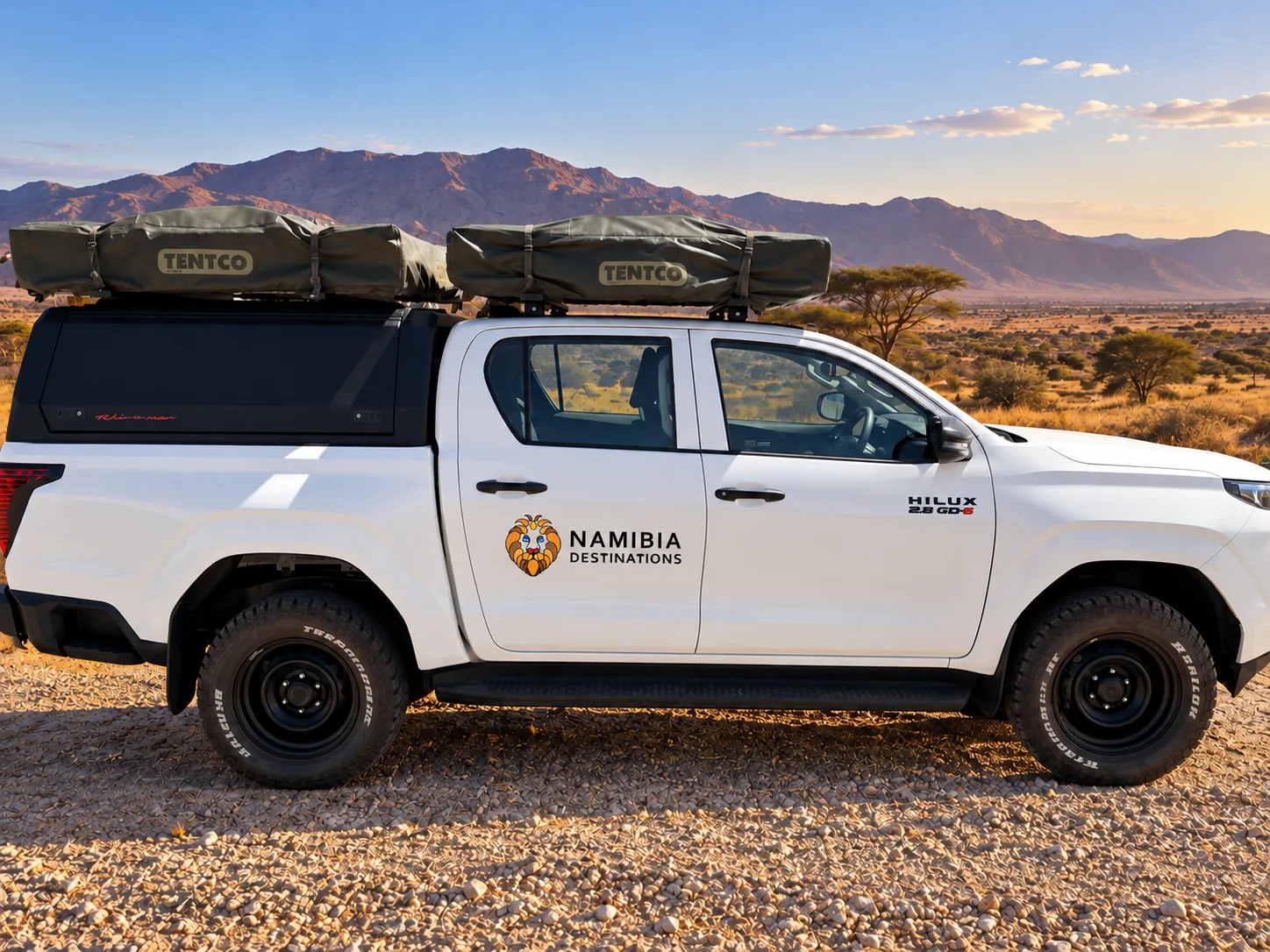
Automatic Toyota Hilux Double Cab and Fortuner 4x4s, with or without rooftop camping.
NTB registered · every handover done in person
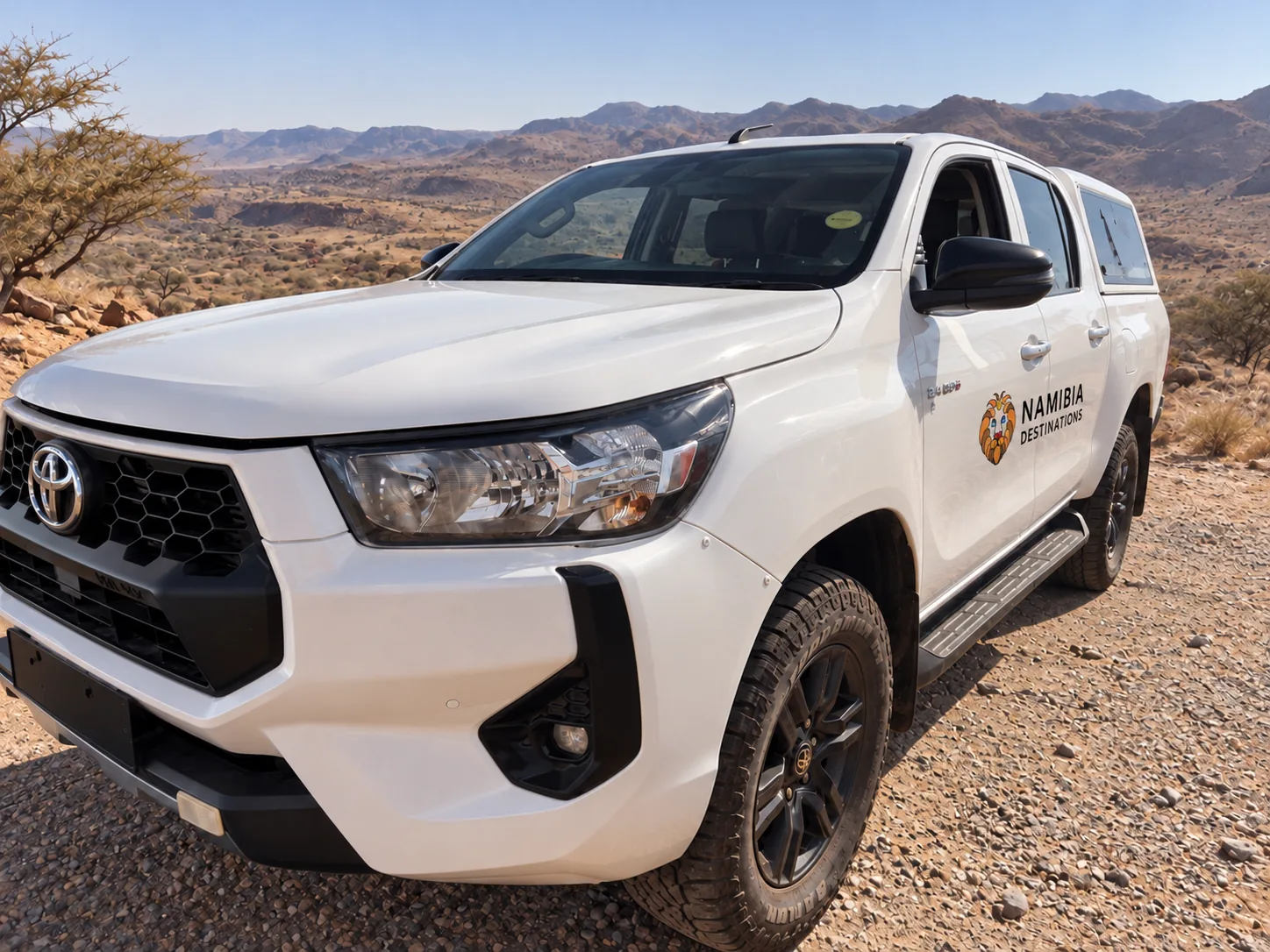
For lodge trips. Five seats, lockable load space.
From N$1,800 a day base rate (high season), plus N$620 a day cover.
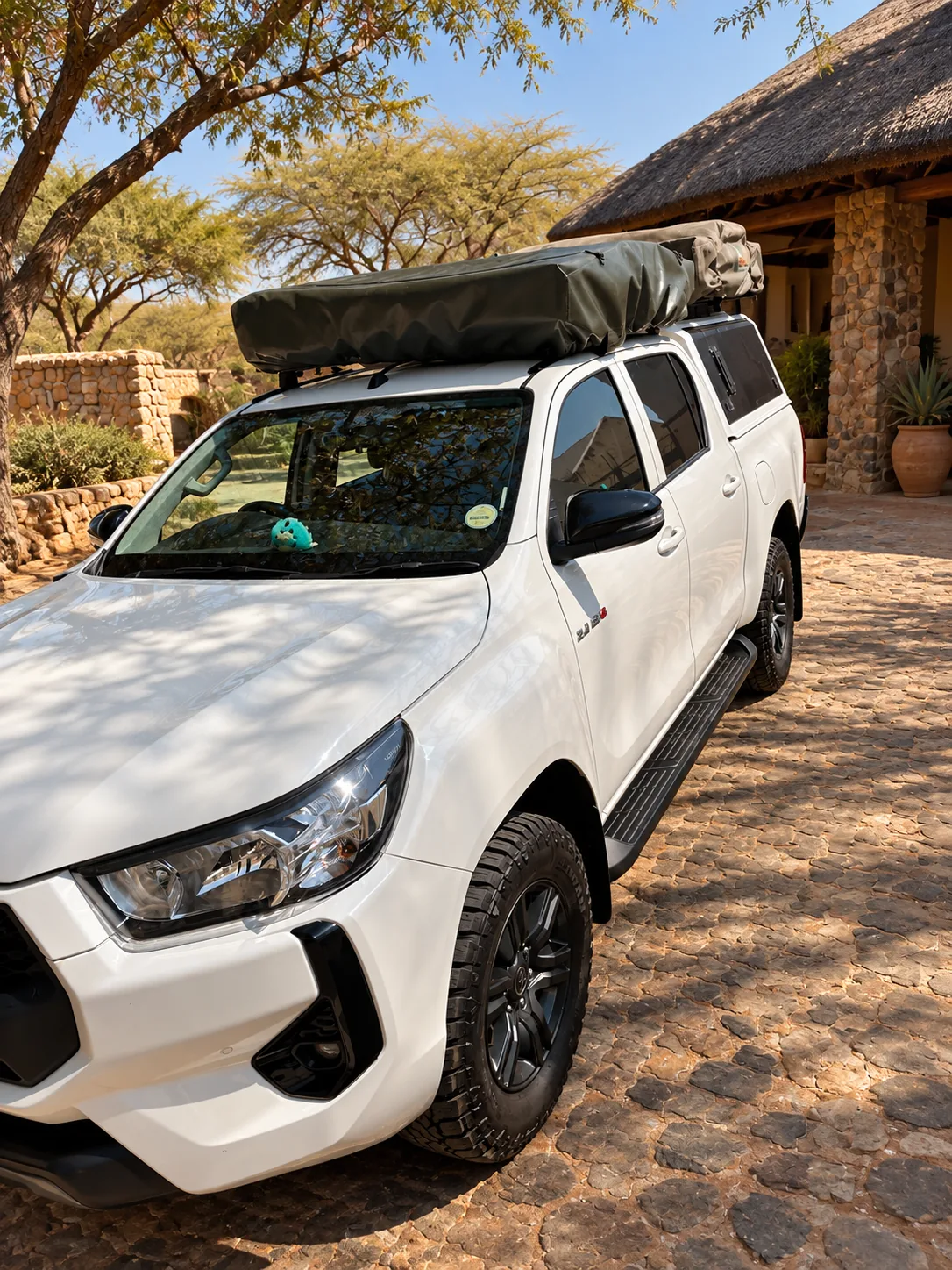
One rooftop tent and the full camping kit.
From N$2,050 a day base rate (high season), plus N$620 a day cover.
Two rooftop tents and the full camping kit.
From N$2,150 a day base rate (high season), plus N$620 a day cover.
With every camping setup. Vehicles without camping kit do not include the kitchen, rooftop tent or bedding.
Gas stove, cast-iron pot and pan, kettle, crockery and cutlery for six, 40 L 12 V fridge/freezer.
Two spare tyres, 12 V compressor, tyre repair kit, tow strap, jumper cables, spade, first aid kit.
Coffee press and kettle (shown), camping chairs and table. Bedding is in the full inventory.
Quantities are counted with you at handover for your setup.
See every season's rates, cover, extras and the price calculator
Not a key drop, not a QR code, not a fifteen-minute queue at a counter. Here is exactly what happens between your booking being confirmed and you driving out of Windhoek.
You get the number of the person handling your booking, not a shared inbox. Route questions, gravel worries, kit queries, border paperwork — answered before you land, so nothing is being explained to you for the first time at the counter.
Pick whichever suits your flight. Someone from our team is there with the vehicle at the agreed time. If your flight moves, you tell us on the same WhatsApp thread and we move with it.
We open the roof tent with you, run the fridge, show you the dual battery, water tank, jack, compressor and recovery gear, and go through the camping box item by item. You leave knowing where everything is and how it works — not with a folded diagram.
Pressures are set for the roads you are actually driving, and we show you how to change them for sand and tar. Then we walk through what to do with a puncture and how to use the recovery kit, before you drive out — not over the phone at the roadside.
The same thread stays open for the entire rental. No call centre, no ticket number, no queue. If something goes wrong at Solitaire on a Sunday, you are messaging the people who handed you the vehicle.
The daily vehicle rate plus two covers added to every quote: zero-excess cover (N$475 a day) and tyre & windscreen cover (N$145 a day), N$620 a day together. Unlimited kilometres and VAT are included. The camping kit comes with camping setups only.
With the included zero-excess cover, the damage excess on covered claims is N$0. Separately, a 20% booking deposit secures the vehicle once our team has confirmed availability for your dates; the balance is due before you travel.
7 days. The daily rate drops as the rental gets longer, and the season is set by your pick-up date.
Leave the vehicle blank in the form and tell us how many of you are travelling and whether you plan to camp or stay in lodges. We recommend a setup in our reply.
Published rates are our current prices, but a booking is only confirmed once our team has checked availability for your dates and sent you the exact total.
May to October is generally dry, with cooler nights and wildlife gathering around Etosha's waterholes. November to April is warmer and can bring rain, greener landscapes and changing road conditions. Choose your month around the regions you want to visit, and pack warm layers even for a desert trip.
Allow around 10–14 days for a first self-drive trip covering Sossusvlei, Swakopmund and Etosha. Fourteen days gives more room for Damaraland and rest days. With 18–21 days, consider the south or the Zambezi Region rather than trying to fit both into a short trip. Your arrival and departure times also affect the days available for driving.
The total depends on your dates, vehicle, rental length, camping or lodge choices, group size and activities. Budget separately for fuel, food, park entry, flights and personal travel insurance. Our rental quotes include the base vehicle rate plus zero-excess and tyre & windscreen cover; accommodation and activities are quoted separately when requested. Send your dates and travel style for an itemised total in Namibian dollars (NAD), subject to availability.
Plan for both road safety and personal security. Drive in daylight, leave time for gravel roads, slow down for dust and wildlife, and avoid sudden braking or steering. Keep valuables out of sight and plan fuel and water stops before remote stretches. Read your government's current travel advice before departure; a familiar tourist route is not a guarantee of safety.
Current Namibia safety adviceIt depends on your route. A normal car can suit a tarred-road itinerary, while a high-clearance 4x4 is a practical choice for gravel routes and camping. Sossusvlei's final sandy section requires a suitable 4x4 or a shuttle. Remote tracks need route-specific advice and experience; renting a 4x4 does not make every track suitable. Tell us where you plan to go so we can recommend a vehicle.
A useful starting loop is Windhoek → Sossusvlei → Swakopmund → Damaraland → Etosha → Windhoek. Plan two-night stops where possible so each destination has a full day, and use a longer trip to add rest nights rather than extra driving. We adjust the order and overnight stops to your flights, available accommodation and preferred pace.
Camping suits travellers happy to set up a rooftop tent and self-cater; lodge stays provide a bed and more convenience, with meals depending on the rate booked. A mix lets you camp on some nights and use lodges for rest days. Compare the complete cost, including campsite fees, food and the camping-equipped vehicle, rather than assuming camping is always cheaper. We offer both camping and non-camping setups.
Requirements depend on your nationality, travel purpose and entry point. Namibia introduced tourist visa requirements for additional nationalities from 1 April 2025, including UK and US passport holders, so do not rely on older visa-free advice. Check the official portal or a Namibian embassy for your passport, required documents and permitted entry points before booking. Check transit-country requirements too, especially when travelling with children.
Namibia's official visa portalStart several months ahead if your dates are fixed, particularly for July–October travel and popular stays near Etosha and Sossusvlei. Ask us to check the vehicle and key overnight stops together before committing to the route. Outside busy periods there may be more flexibility, but a last-minute space is never guaranteed. We confirm availability before you commit to a booking.
Bring layers for cold mornings and warm days, closed shoes, a sun hat, sunscreen, sunglasses, personal medicines and a basic first-aid kit. Carry drinking water on driving days. Consult a travel-health professional about your exact route, season, vaccinations and malaria precautions; requirements can also depend on countries visited in transit. Check the listed equipment for your chosen vehicle before buying camping gear.
Namibia travel-health guidanceYour name, email and dates are enough. We confirm availability and send the full quote.