Lenses
Bring a wide (16-35mm or 24mm equivalent) for dunes and Deadvlei. Bring a telephoto (70-200mm) for wildlife and compressed dune layers. Skip the macro unless you're chasing reptiles.
Best light
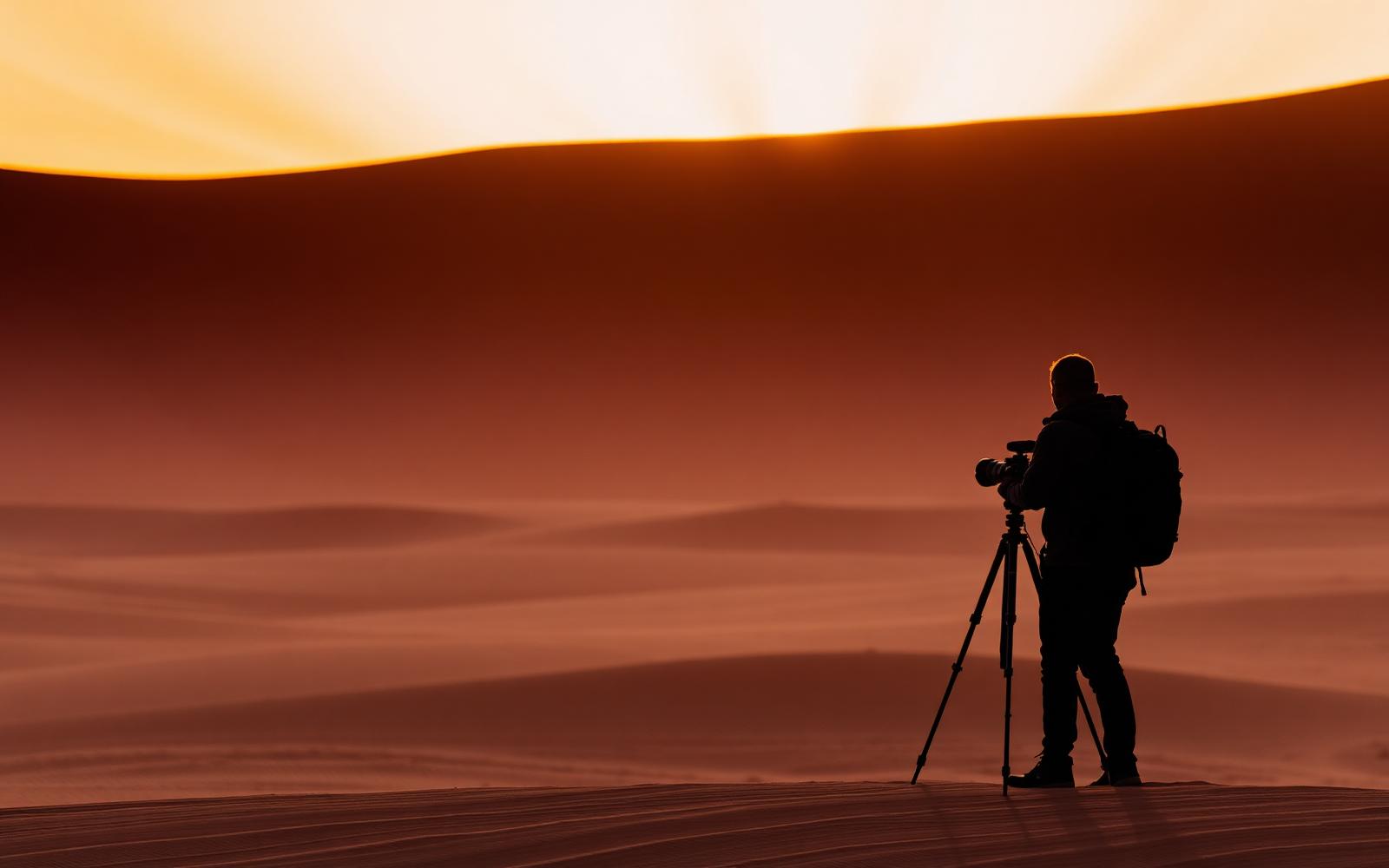
First 30 minutes after sunrise at Deadvlei (the camel-thorns light up, foreground in shade). Last 30 minutes before sunset at Dune 45 (the dune face glows orange). Midday is harsh — use it for travel days, not shoots.
Settings
Aperture priority f/8–f/11 for dune landscapes. Low ISO (100–400) — there's plenty of light. Bracket exposures for the white salt pan at Deadvlei (it confuses meters).
Practical
Bring a microfibre cloth and a rocket blower — sand in the lens is the killer. Pack two batteries — cold mornings drain them. Drone use needs a permit. Tripod for sunrise blue hour at Deadvlei.